In focus: Touch
The sense of touch plays a key role in our interactions with the world, whether sensing temperatures, signalling pain, allowing us to hold and manipulate objects, or providing a route for social connection. Touch is also a complex sense: different receptors in the skin detect different qualities of touch, including pressure, vibration, stretch, texture and temperature.
Haptic technologies range from common vibration motors found in phones and game controllers (e.g., Sony DualSense, Apple Taptic Engine) and force-feedback devices like steering wheels. More advanced solutions include: haptic vests that provide localised feedback for VR; full-body suits that deliver tactile sensations across multiple areas; and 4D cinemas that incorporate in-seat vibration, motion and even wind effects. Experimental approaches are also emerging, such as ultrasonic mid-air haptics, surface haptics that simulate screen textures and Electrical Muscle Stimulation (EMS), which uses low-level electrical impulses to directly evoke sensations of force or movement.
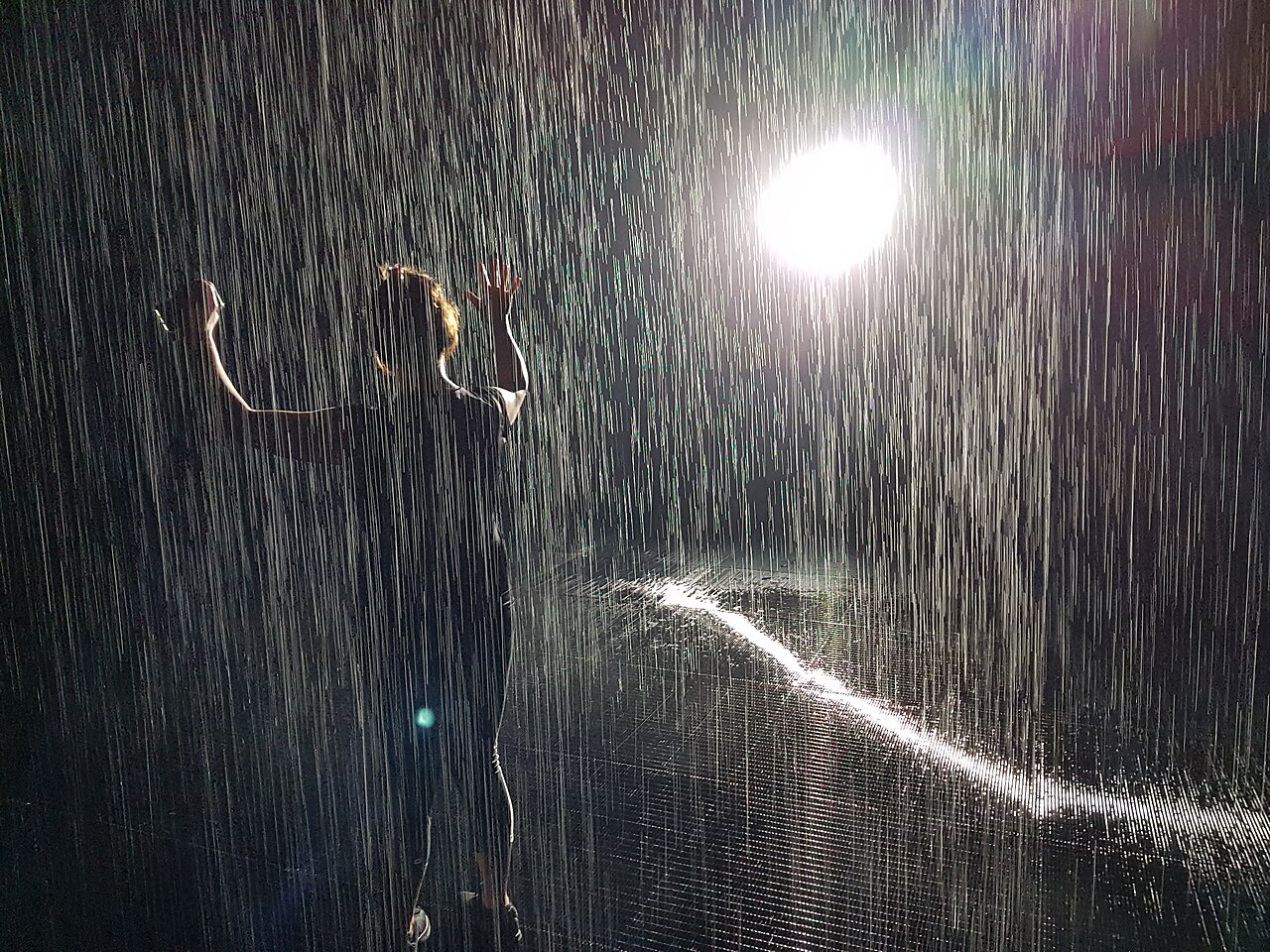
Rain Room, Sharjah Art Foundation (2018). Installation by Random International where visitors walk through simulated rainfall whilst remaining (mostly) dry. © Wikimedia Commons, licensed under CC BY-SA 4.0
Case study: Water Droplets
Various experiences such as 4D cinemas and theme-park rides project water to enhance realism. This use is also appearing in other more bespoke experiences. For example, Arcade (see Case study: Arcade) also incorporates sudden splashes of water when a nearby character is shot, to simulate the spray of blood. These can be delivered through simple nozzles that release a timed spray from a central reservoir (used in 4D cinemas and theme-parks), but there are other methods such as piezo atomisers to create a fine mist, peristaltic pumps to deliver a precise droplet burst, and air-water jets using compressed air to flick a small amount of liquid. Large-scale installations such as Rain Room95 use a grid of computer-controlled ceiling nozzles supplied by pumps and recirculating water systems, with overhead tracking cameras to detect visitors and pause the rainfall above them, allowing people to walk through rain (mostly) without getting wet.
Case study: In Pursuit of Repetitive Beats
In Pursuit of Repetitive Beats, a VR film created by Darren Emerson, demonstrates how touch-based stimuli, delivered via haptic vests and environmental wind, can be incorporated into VR to elevate immersion. Set in 1989, In Pursuit of Repetitive Beats immerses its audience in the UK acid-house scene. In addition to the VR headset, participants wear a haptic vest which physically vibrates in sync with the music to replicate the visceral sensation of a rave's pulsing beat. At times, a fan is activated to simulate the sense of being outside or driving in a car with open windows. Director Darren Emerson explains that the audience "can be in a specific physical location that has a fan so that they can feel the wind blowing on them as they're in the car but also as they're going into this cosmic space and dancing."96

Poster for Jeff Wayne's The War of the Worlds: The Immersive Experience. © Layered Reality.
Case study: Jeff Wayne's The War of the Worlds: The Immersive Experience
Produced by Layered Reality, Jeff Wayne's The War of the Worlds: The Immersive Experience was a large-scale walk-through encompassing live actors, spatialised sound, holograms and various VR segments with realistic physical sensations. Across 24 scenes, tactile elements were used to help drive narrative. These included controlled vibration and motion cues for artillery fire and Martian machinery, cool and hot airflow to indicate outdoor chases and a heat-ray, and moments in which visitors physically crawled or slid.