In focus: Smell
Smells can have a strong, often subconscious, influence on mood and emotion, as well as triggering powerful recollections. This strong link to memory is sometimes referred to as the Proustian effect, after a sequence in Marcel Proust's novel In Search of Lost Time in which the narrator tastes a madeleine (a small French cake) dipped in tea and is suddenly flooded with long-forgotten childhood memories. Although this example focuses on the taste of the cake, flavour experiences of this type involve smell as well as taste; this is why people often find that food tastes bland when they have a cold.
Efforts to incorporate smell into experiences generally rely on computer-controlled scent-delivery systems. These devices release specific chemical odorants, typically stored in pre-mixed oils or cartridges, at precisely timed moments to synchronise with the experience. A promising emerging technology is to use modular piezo-electronic devices to vaporise odorants precisely without heat102. Alongside these established chemical-release methods, highly experimental research is exploring the direct electrical stimulation of olfactory receptors within the nasal cavity, aiming to evoke smell sensations without using physical odorants103.
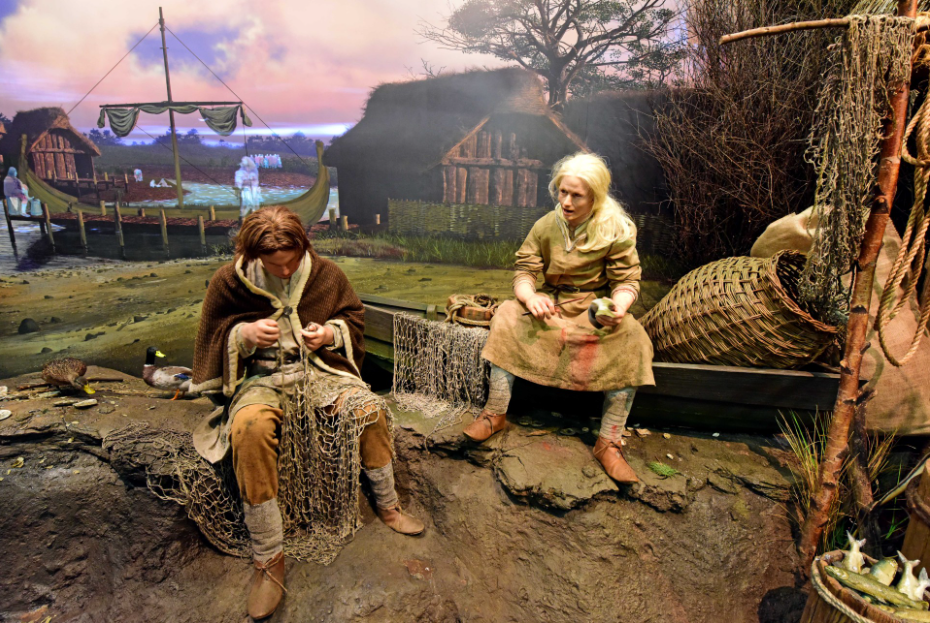
Animatronic fishermen tableau at JORVIK Viking Centre, where scent effects are used alongside the visual scene to evoke the smells of the Viking-age environment. © York Archaeology
Case study: Jorvik Viking Centre
The Jorvik Viking Centre in York, opened in 1984, has long been recognised for its pioneering use of multisensory design to bring history to life. Central to the experience is a ride through a reconstructed Viking settlement, complete with animatronic figures, sounds, visuals and distinct smells. The latter were delivered originally using scent pots but are now delivered via pipes from a centralised scent bank for ease of refilling. Smells are released at key points along the ride, which range from wood smoke and leather to fish and human waste. Several of the authors visited the museum as children and vividly remember the distinctive smells of the ride decades later. For them, the experience was exciting, at times even frightening, yet profoundly memorable. This highlights how multisensory design can create long-lasting impressions that endure well beyond the immediate visit. By blending sight, sound and smell in a tightly synchronised way, the Jorvik Viking Centre illustrates how relatively simple technologies, when applied thoughtfully, can transform education into an embodied, emotional experience.